

How Many Drafts Does It Take?
answer: as many as it takes.

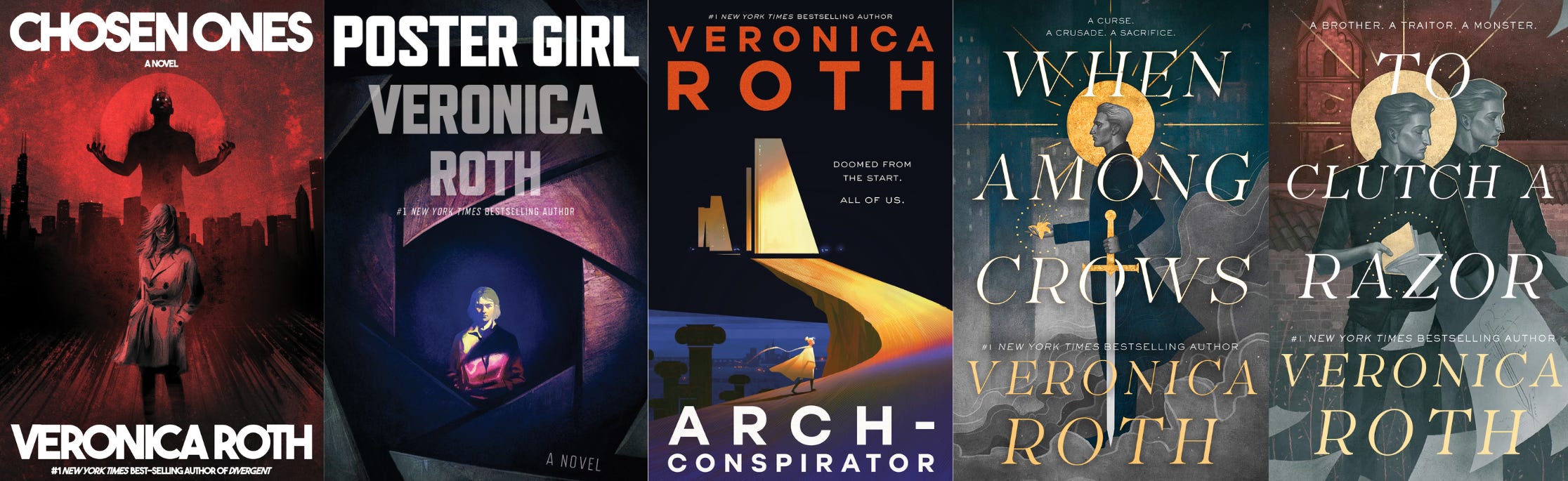
A little while ago I posted a note about all the drafts I went through before settling on the final version of Seek the Traitor’s Son (which comes out May 2026). I wrote Seek the Traitor’s Son over the course of six years, beginning in September 2019. I worked on it on and off while editing Chosen Ones, writing and editing Poster Girl, Arch-Conspirator, When Among Crows, To Clutch A Razor, and Seek the Traitor’s Son’s sequel1. (This is why I was only writing novellas for three years.)
When writers talk about writing a book for that long and in that many drafts, the assumption is that we really agonized over it. That’s not what this was. Writing this book for that long was fun, and it involved constant experimentation. This book is an interesting case study in what can change between drafts and how to feel your way into the “right” version of the story you’re working on. If nothing else, you may find my messy, iterative process fascinating and alarming in equal measure. So here we go:
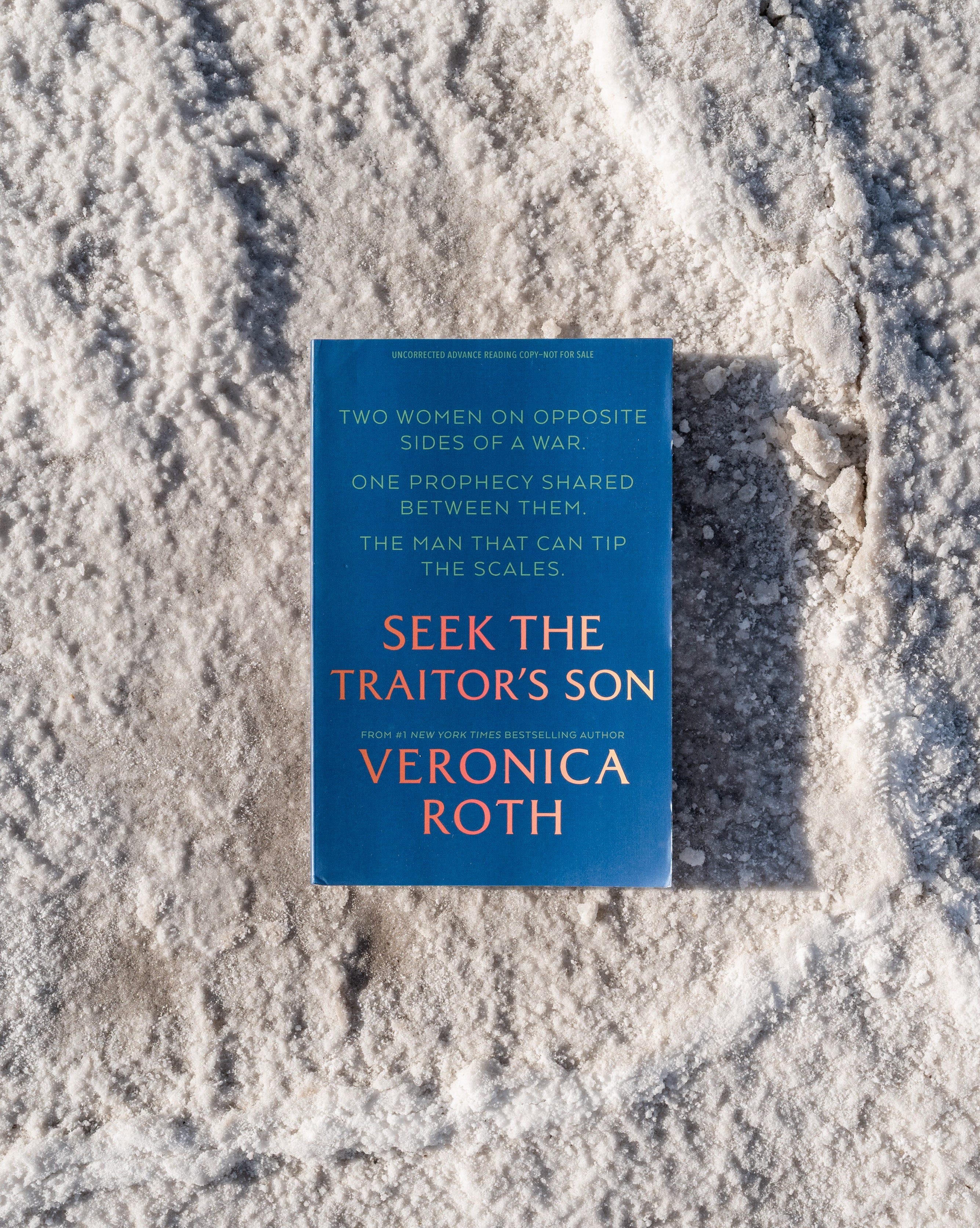
In the first draft, Elegy was a king, going to a strange, dangerous man for help. He knew their enemies better than anyone else did. His name was Theren. (5 pages.)(Fantasy)
First of all, yep—in about half of these drafts, Elegy was a man. And this first “draft” (using the term loosely) just came from an instinct about two characters—or specifically, the dynamic between them.
In the second draft, Elegy wasn’t there. It was Theren’s backstory— how did he come by such deep knowledge of his nation’s enemies? Through struggle, turns out. (92 pages.)(Fantasy)
In the second draft, having realized I liked the dynamic I was exploring, I decide to focus on the character who most interests me and figure out what their deal is.
At this point the worldbuilding was very “blahblahblah fantasy country blahblah magic blahblah mountains idk.”
The third draft began with an interrogation. Theren had come home, but was he a traitor? Everyone but Elegy seemed to think so, and his fatalistic attitude wasn’t helping his case. (63 pages.)(Fantasy)
I know Theren now, so for the rest of the drafts he’s basically the same. Here I was interested in someone surviving an ordeal and their survival is what makes them suspicious to people. I also discovered something that turns up in every version of this story, which is that Elegy sees Theren—for better or worse, and sometimes better than he sees himself.
In the fourth, fifth, and sixth drafts, Elegy was meaner. Then so was Theren. Every scene was increasingly more like a collision. I knew they needed more tension between them, but this kind of tension was artificial. (collectively, 401 pages)(Fantasy)
Writer knows there’s not enough tension; writer tries to force that tension. I think of this draft as the “who is Elegy, though?” draft.
In the seventh and eighth drafts, something interesting emerged: Elegy’s restraint. Everyone wanted something from Theren, information they knew he possessed, and she was the only one who wouldn’t pry it out of his head by force. Maybe it would be easier, she said, but it wouldn’t be right, and it’s not what I am. And that’s when I really knew Elegy…and Elegy & Theren. The tension between them isn’t a surface-level enmity. It’s rooted in the past. You’ll see what I mean. (445 pages)(Science Fiction— now they were mostly on a space station.)
…and now I’ve found Elegy, which means I’ve found both of them. But this is also the draft where I realized I was using only shallow worldbuilding; I had no idea, really, where this story took place and how the setting impacted the characters and plot…which it should.
In the ninth draft, I thought, well, let’s try it as YA. Just as an experiment. Theren got younger; timelines were shorter; Elegy had more parents. Everything got a little lighter in tone, because the compressed timeline made the wounds shallower. It was fun, but it wasn’t the book. It was, however, set on Earth, a civilization built on ruins. (109 pages)(Science Fiction)
Career considerations started to enter the draft at this stage. It’s been a long time since I had a YA idea, and I wondered if a path back to that category would be to age down an adult idea. I wasn’t set on this and no one was pressuring me to do it, I was just curious.
Setting this draft on a ruined Earth was a similar move: I’d heard from my YA publisher many years before that they would prefer "grounded” books (code in this case for “set on Earth”), so I thought, okay, while I’m trying out YA, I’ll try that, too. Even though the reason behind trying it was strategic (and mildly depressing), it actually led to creative discovery and excitement—setting this book on Earth electrified me. It brought up all kinds of new worldbuilding questions, made me imagine our cities as ruins, awakened my interest in the wonders of this planet.
One of those new worldbuilding questions was answered by the Fever, which is a highly contagious virus that kills everyone who contracts it…only to resurrect half of them a few days later, with abilities they didn’t have before. It was my way of explaining the “magic” that was in earlier drafts (integral to the plot) while still keeping the story on Earth. It is now my favorite aspect of the worldbuilding, and I can’t believe I wrote EIGHT DRAFTS without it.
But…the book wasn’t YA. So…
The tenth draft, I knew. Elegy had been a man, a woman, a teenager, a king, a queen, a soldier, a bounty hunter. She’d had the power to look into a person’s memory and she’d been ordinary. She’d been cruel and kind and everything in between. She had lived in a fantasy land with no name, on a space station, on a mountainous planet, and then on Earth. I discovered she was wary and weary, but with a kind of certainty at the core of her. And that’s when I really started writing the book. (All drafts, research, revisions, added together: 3,000 pages.)(Dystopian Fantasy)
This is the tenth draft, but it’s also…the rough draft. This is when the pieces were all in place: Elegy, Theren, and their world. What stayed from the very start, though, was the dynamic between them. When she meets him, she’s putting together a puzzle. When he meets her, he’s just trying to survive the encounter.
When writers say that no work is ever wasted, all of this is what we mean. I could have written this book more efficiently, but it was fun to play around with it and I had other projects in the works, so why prioritize efficiency? And I learned more about what I wanted and what was right for the story with each draft.
This is also—sneakily—a study in writer’s block. Each of these drafts had a stalling point, some earlier than others. Stalling out in a draft is often the result of making the “wrong” decision, but it can be difficult to figure out what that decision was. Despite all these different drafts, I actually made the same “wrong” decision each time:
I kept trying to force things to grow that didn’t have roots. The character of Elegy, just a collection of qualities whose origins I didn’t understand; the source of the tension between Elegy and Theren, an interesting dynamic that had no foundation; a story adrift in a world that stayed fuzzy and had no impact on anything. All I did, over the course of these drafts, was anchor the story, give it stability and depth.
So if you’re stalled in your draft, ask yourself: have I given all of these elements roots? Have you figured out the result that you want without building in the elements that will get you there? This doesn’t mean putting a bunch of backstory on the page. Think of it like this: you’re a watchmaker. Someone comes to you to fix their watch. You know what the inside of the watch looks like, you can see all the gears moving, you know how it all works—but when you return it to the customer, all they see is the watch. That’s what you need for your story: for you, the creator of it, to understand its gears.
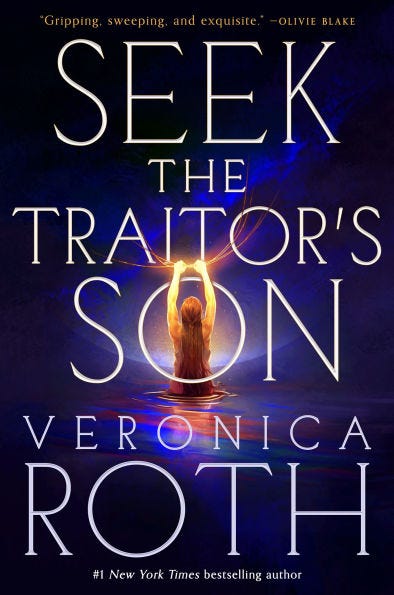
The book comes out in May. I miss working on it already.
<3,
V
Yes, the sequel to this book is already written, I just have to finish editing it.
Thank you so much for sharing this creation story! I see parallels to Susan Dennard's discovery that her writing brain needs to have many different projects to alternate between, rather than being 'stuck' on just one book at a time.
My own WIP needs 30K cut to be querying length, and the deleted scenes have similar word count to the book itself. Some of those early versions are so night and day different, you can't recognize them as the same story. But they were necessary to distill the heart of it.
I can't wait to read this.
Thank you for this! I am young, and want to be an author. I always get frustrated by messing up my plot in a draft, but seeing a successful author like you experiencing it, it gives me motivation.
P.S. You're my favourite author and your books have made me want to be an author :)