

The Big Reveal
an exploration of a trope I'm apparently obsessed with

I hesitated to even write the word “trope” in this subheading because marketing a book with tropes, particularly romance tropes, has become so ubiquitous (and yet oddly divisive). But just like letters are the building blocks for words, tropes are the building blocks for stories, and we can choose to use them the same way people have always used them, or we can arrange them in new ways. Knowing why we return to certain things can help us understand ourselves and the stories we love to read (and write).
So I’m going to write this examination of a trope I love, which I can’t actually think of a good name for. It’s a character unveiling. Sometimes it’s a scene of sudden vulnerability. It’s (often) a badass reveal. It’s the moment in a work of fiction when a character exposes themselves to another character so that they can be fully known.
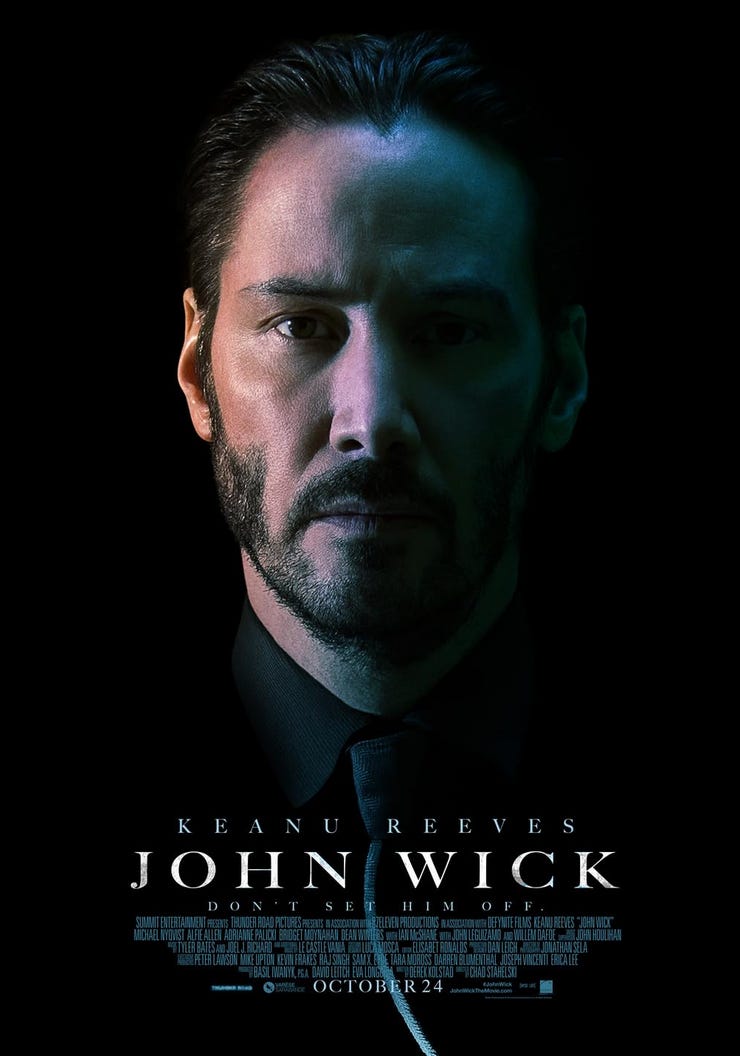
A man of focus, commitment, and sheer will.
You can tell the people who made John Wick understand this trope because they absolutely feasted on it. If you’ve never seen this movie, let me tell you how it goes: it begins with a very sad man (my favorite, as you know if you’ve been paying attention to this newsletter) grieving the loss of his wife. The shithead son of a mafia boss gets into it with John over his car, and Shithead Son ends up killing John’s dog and stealing said car. But John, as it turns out, is very much the wrong person to have done this to. The reveal creeps toward you over the course of the next ten minutes as you come to understand that John Wick is really great at murdering people. Good luck, kid.
This is the version of the big reveal that I first fell in love with: someone seemingly ordinary or perhaps even pathetic shows you that they can absolutely hold their own in a fight.
There’s a book version, too.
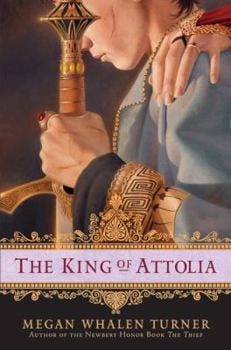
For a moment, Costis could see, not so much what was hidden but that there were things hidden that the king did not choose to reveal. Things that were not for Costis to see.
King of Attolia is about the thief Eugenides—it’s the third book in the series, so I won’t spoil much—but it’s told from the perspective of Costis, who pretty much thinks Eugenides is an annoying, feckless king unworthy of his queen for most of the book. Through the distortion of his biased perspective, though, you start to get the sense that Eugenides is actually very clever (as we know from earlier books in the series), and he is doing something, and all you want is for Costis to see it, for everyone to see it. This all builds to a single moment of pure, delicious competency that made me feel completely unhinged. It was so satisfying I wanted to scream.
Guess what, Costis? Eugenides has been smarter than all of you dumdums for approximately 375 pages. And I’m obsessed with him.
Admittedly, most of the character examples I thought of when considering this trope were men. And when I thought about why, I remembered this:

You know the law.
Mulan, baby.
You know how this goes: Mulan disguises herself as a man in order to save her father’s life, crushes it as a soldier, and ultimately has to reveal herself to be a woman all along, to the shock and dismay of all the dudes who would never have given her any credit if she looked like herself. For more of this trope, see also: She’s the Man (and Twelfth Night, which it’s based on) and Blue Eye Samurai (ish).
There’s a different vibe here, though, which is that when a woman character disguises herself as a man, she’s actually badass-revealing herself from the start—by hiding her womanhood, she’s removing an obstacle to being truly known. The big reveal is then, while still technically a reveal, more of a challenge to the other characters. Can you still see me as I am even with your biases restored?
There’s also the Buffy version of this where she presents her stereotypical femininity, knowing that it will make other people underestimate her…only to reveal that she is completely in control of the situation (in the stake-y sense). See also: Black Widow.
The way I use the big reveal is not quite in line with these examples. Oh, don’t get me wrong: I’ve done a badass reveal or two. For example, Theren limping into the room covered in blood in Seek the Traitor’s Son, or Dymitr picking up a sword for the first time in When Among Crows.
But really, I like to do this:
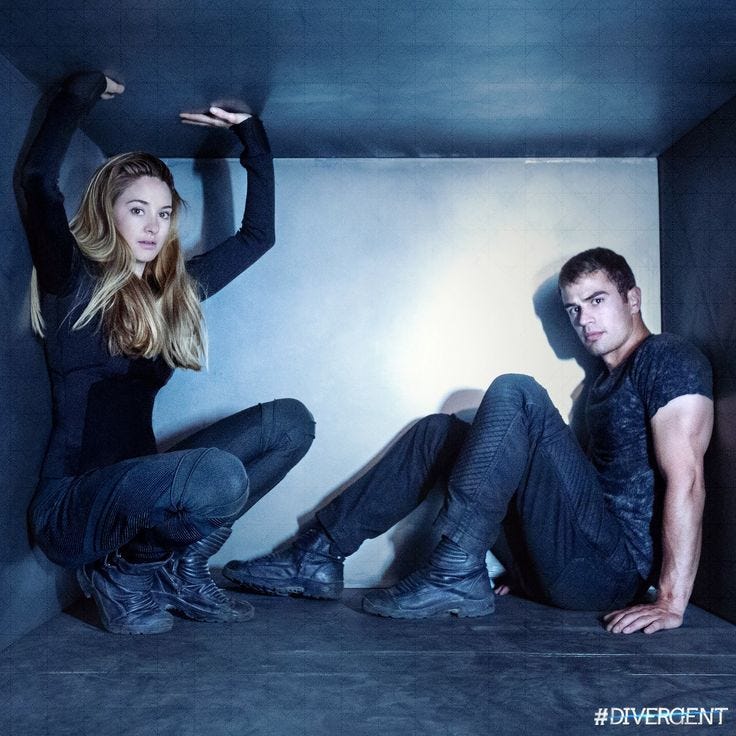
“You would let me see that?”
“Why else do you think I’m going in?” he asks quietly. He doesn’t lift his eyes. “There are some things I want to show you.”
And by “this,” I mean Four’s fear landscape scene in Divergent. If you haven’t read Divergent, the characters go through a lot of fear simulations, which are basically simulated scenarios wherein a person encounters their worst fears, usually in some kind of abstracted form. A fear landscape is just a bunch of fear simulations strung together— a kind of final test of all their worst fears in a row. And at one point in the story, when Tris and Four are still just student and instructor but have had a few tense and even flirty moments, Four takes Tris into his fear landscape. He shows her his worst fears—and in his case, showing her his worst fears means revealing his true identity to her, something he’s kept hidden for two years.
Ah, romance.
Really, though— romance always involves self-exposure and vulnerability, even if it just comes in the form of telling someone you like them without knowing for sure they’ll say it back. But fiction offers us the opportunity to exaggerate the ordinary in order to explore it and highlight it, and science fiction and fantasy are particularly good at that. This fictional technology, the fear landscape, gave me the space to have this character put himself out there in the most intense way possible. Here are the worst things in my mind. Walk through them with me.
And then, of course, there’s Seek the Traitor’s Son.

“It’s intimate,” she says. “Like you didn’t just share a memory, you shared…a body.”
The quick rundown of Seek the Traitor’s Son is that it’s set on a futuristic Earth that’s been devastated by the Fever, a virus that kills everyone who comes into contact with it and resurrects half of them, days later, with special abilities that usually relate to the past. Our heroine, Elegy, is summoned before the rare individuals who perceive the future instead, though, and they tell her she’s the subject of a prophecy. She’ll either save her people from their enemies, or fail them…and along the way, she’ll fall in love with a man who will bring her death.
There’s a bit of a time jump in the book—you see the lead-up to a catastrophic event and then shift forward a few years. When you meet the MMC (Theren) again after that gap, he’s transformed…but how did he get this way? The answer unfolds over the course of the story, mostly through dialogue or brief recollections in his POV. But because some of the characters in the novel have special abilities relating to sharing or reading memories, there’s also an opportunity to do something more dramatic.
And I did, obviously.
Theren takes a leap of vulnerability: he offers to show Elegy his memories so she can better understand their enemies. Again, here are the worst things in my mind. Walk through them with me.
It’s a reverse badass reveal. At this point, you already know Theren is tough and capable. But he exposes himself to her (not like THAT, you perv), and to the very real possibility that she’ll use that vulnerability to cause him pain.
AH, ROMANCE.
These moments are about bravery. Not the kind that comes from physical prowess—though I love that, too—but the kind that comes from personal risk. They are fragile moments that reveal both characters. Not just the one who makes themselves vulnerable, but the one receiving the offering. What does Tris do when she sees the worst things in Four’s mind? What does Elegy do?
Now that I think about it, so many of my stories wrap themselves around these moments. It’s a very human desire, the desire to be truly known. We long for it and we dread it in equal measure. And all of these reveals are just that desire made manifest: a character presenting themselves, whether triumphantly or with trepidation, so that another character can truly know them.
When you’re building characters, you need these revealing moments, these tests of character. And in science fiction and fantasy, particularly, you have this great opportunity to use your world to facilitate them—to do something that wouldn’t be possible in a contemporary story to show us who your characters are.
I’m always talking about “the soup”: story, character, and world, melding together. This is exactly why I talk about it. Because revealing character isn’t about the revelations in your character’s inner monologue. It’s about using the story and the worldbuilding to show the character to us.
Seek the Traitor’s Son is out now!
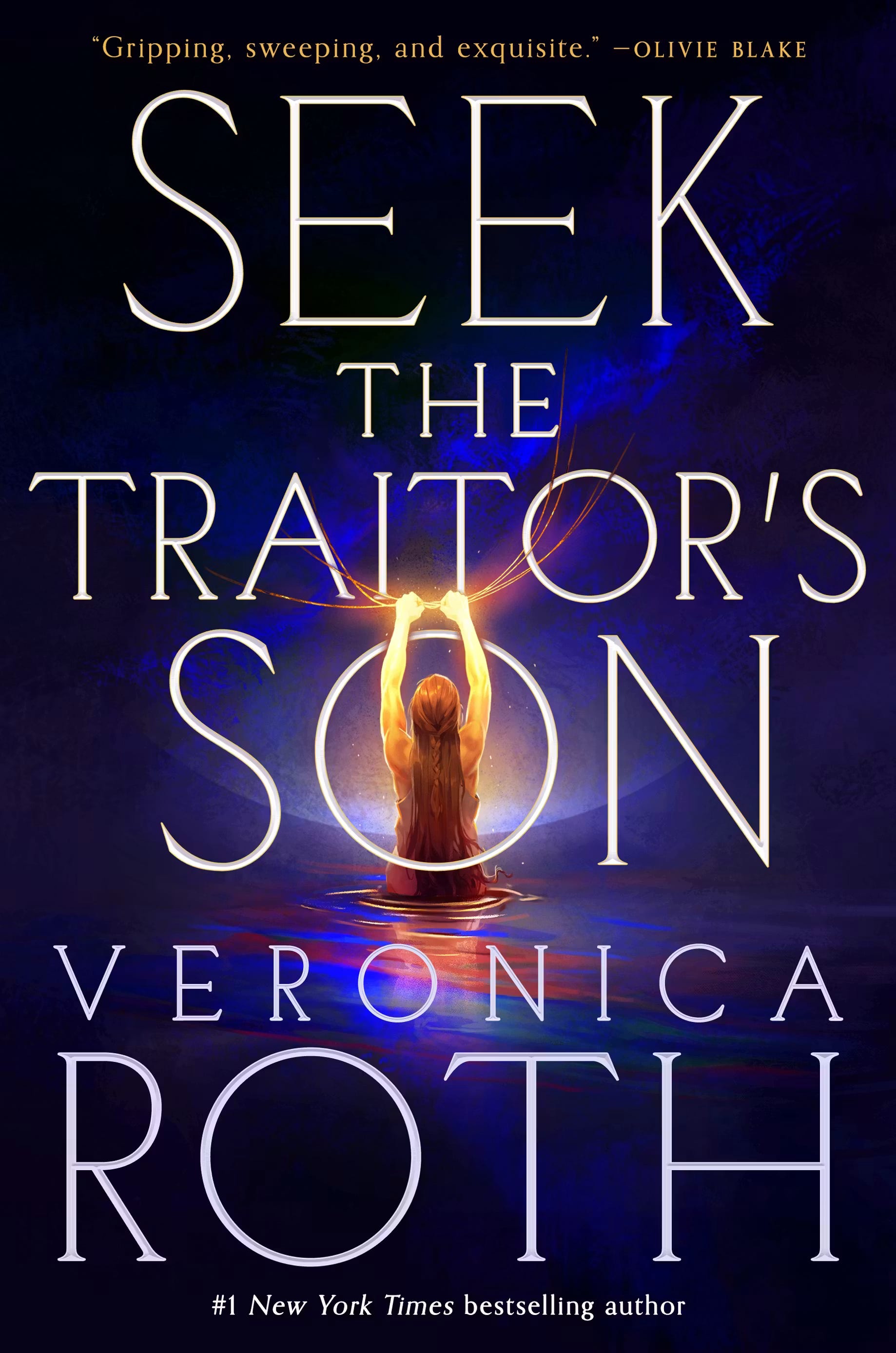
And you can buy it here! (Or anywhere you get your books.)
…And I’m still doing events for it!
I’ll be in Petoskey, MI on June 19th!
And also in Edinburgh, Manchester, and London in July!
Come say hi.
V
Shout out Eugenides and the Queen’s Thief series. “The big reveal” is what nearly every one of those books hinges on, but I often say that book 3 is everyone’s favorite because it is the first time in the series that we, the readers, are in on the joke. We like Costis as a proxy for ourselves, being made to feel silly instead of us for once.
I didn't know that I, too, love this trope but now I do. Also, I think I gotta read that King book now??